Growing up as an only child, I always loved the hours spent alone in my room with only my imagination for company. One day I was a doctor, fixing up my stuffed animals with paper towel casts. The next I was a teacher, docking the giraffe marks for showing up late (I suppose my teaching method was rather harsh). Then emerged the entrepreneur, selling my bathroom-mixed beauty concoctions to placating friends and family. But my favourite role of all? That was reserved for ‘author.’
I remember spending hours upon hours crafting perfect stories about worlds that didn’t exist; worlds that sometimes, I wished I could escape into the pages of. Writing gave me the words to express what my heart never could. It gave me light in moments of darkness; it gave me connection when the world felt unbearably lonely. Through the characters I devised, I was able to get to know myself with a depth I might not have been able to access otherwise.
Fast-forward twenty years and I’m finishing my master’s degree in community psychology, submitting my thesis on how to share those very learnings about the beauty of writing with the world. And now, I have the joy of sharing those insights with you, dear reader.
Many of us have experienced that eye-roll worthy moment where our therapist tells us to simply try “journalling out our feelings.” We might nod along and agree to try, but what does that ask really mean? What emotional work does that entail? Where would we even start? Well, let’s dive in and see.
What is Creative Writing Therapy?
At its core, creative writing therapy is the practice of using the written word as a gentler way to explore your inner world. Since Pennebaker and Beall (1986) coined the term ‘expressive writing’ as a trauma-centered treatment strategy, writing has been widely studied as a way of accessing deeply held emotions to help make sense of difficult experiences (Deveny & Lawson, 2022). While expressive writing typically focuses on true events from your life, creative writing can achieve many of the same therapeutic benefits through a fictional lens (Deveny & Lawson, 2022; Pennebaker & Beall, 1986). Whether it’s poetry, journaling, letters, or other imaginative forms, sometimes emotional truths can feel a whole lot clearer through a fictional lens (Porras-Segovia et al., 2024).
Benefits of Creative Writing for Mental Health
The benefits of creative writing are as vast and as deep as you personally make them to be. For many, the main benefit is simply externalizing difficult experiences and emotions onto the page so you no longer have to hold them so tightly in your mind. Bottling up emotions can feel quite isolating, particularly for teens craving relatability at a development level (Deveny & Lawson, 2022). Creative writing can provide that gentler, more accessible outlet for otherwise overwhelming emotional experiences (Deveny & Lawson, 2022).
Should you need some more convincing, below are some results of just a few of the many studies on the therapeutic benefits of creative writing (Bensel, 2018; Deveny & Lawson, 2022; Harrison, 2021; Porras‑Segovia et al., 2024).
Creative writing can assist with…
- increasing self-understanding and insight;
- empathy building and perspective taking;
- building self-esteem and self-confidence;
- strengthening the brain-body connection;
- the cognitive processing of trauma;
- community building and relational understanding (particularly when writing is shared);
- facing difficult and suppressed experiences from a place of relative detachment;
- providing a sense of control in the face of helplessness, as you are the author of your own experience.
If you’d like to read more in depth about the benefits of creative writing specifically for teen mental health, I invite you to check out my masters’ thesis –Rainbow Writes: Peer-Led Creative Writing Groups’ Potential for Promoting 2SLGBTQ+ Youth Wellbeing.
Encouragement for “Non-Writers”
I also want to acknowledge that writing isn’t always comfortable. Research suggests that putting difficult experiences into words can feel emotionally challenging at first, but over time, can help us understand our experiences with more compassion and gently reshape the stories we tell about ourselves (Porras-Segovia et al., 2024). Writing can help us remember, revisit, and reorganize painful moments in a way that makes them feel a little less overwhelming. It can also help us connect with our own version of truth and better understand how our experiences continue to shape our inner world (Deveny & Lawson, 2022).
Now hear me when I say this – there is no such thing as a bad writer. If you’re someone who thinks of writing and their skin gets itchy, you’re not alone. I encourage you to first reflect on where your beliefs about writing ability might come from. Oftentimes, our educational experiences with writing can convince us that we’ve either “got it”, or we don’t. We’re “good”, or we’re not. As a young person, these labels of “good writer” or “bad writer” can deeply impact our self-worth and end up following us through to adulthood, preventing us from enjoying all the beautiful benefits creative writing can provide.
At the end of the day, creative writing in therapy isn’t about grammar, talent or getting the words “right.” It’s about making space for your voice, exactly as is. My role as therapist isn’t to critique what you write, it’s to help you get curious about what emerges as you write, and walk alongside you to discover meaning in your own words. My encouragement here would be to see this as an experiment – an opportunity to heal the inner child who was told their writing wasn’t good enough.
Here are a few small encouragements that that inner child just might appreciate hearing:
1. Criticism is the enemy of creativity.
Try your best not to let your inner critic drive the bus during the writing process. Writing is about self-expression, not self-judgment. Thank that critic for trying to help, then kindly ask them to take a back seat for now. Trust your instinct and abilities and leave the editing until later (if at all).
2. No one else has to read your writing for it to be meaningful…
and what you write doesn’t have to make sense to anyone but you. Sharing is not the important part of creative writing, so it gets to be your choice when and if you share what you produce with anyone. This also means you get to do whatever you want with your writing once it’s done – share it, keep it, burn it! Whatever feels it would serve you – it can be healing to give yourself the permission to write just for the sake of writing.
3. Writing is meant to be fun.
Writing is not supposed to be a tedious activity that leaves you frustrated or exhausted. Writing should be inspiring, joyous, or at the very least, a good distraction from daily life. Remember that everyone is a writer, so long as they are putting words on a page. If you don’t agree, revisit encouragement #1.
Summer Writing Exercises for You and Your Teen
Below is a series of creative writing exercises intended to bring you or your teen closer to your inner world. If you have the ability to do these exercises together, this could be a powerful way to increase your mutual understanding before speeding into another stressful school year. You might be surprised what you learn when you listen to their words through this new lens.
Writing for Self-Understanding
I always begin the writing groups I lead with this simple exercise – I Am From poems.
The original poem was written by George Ella Lyon and is a very accessible way to reflect on the people, places and experiences that shaped your worldview. Think of this as a souped-up Mad Libs. This poetry format asks you to fill in details from your life – present or past – that when read together, can paint a beautiful picture of the things that made you who you are. If you share these poems as a family, you might also be amazed to discover the variance in what each family member attributes special meaning to.
Writing for Self-Confidence
You know how it’s always easier to give your friend a compliment than to give one to yourself? This exercise taps into that part of our brain that thrives in self-criticism and comparison and flips it on its head.
To start, take a look through this list of character traits and choose 5 that you find admirable. Next, set a timer for approximately 3 minutes and free write (meaning write whatever comes to mind first without pausing or editing) on how people close to you inhabit at least one of those traits. Your prompt might be, “I admire _____, because they’re ________ when they _______. For example, “I admire my dad because he’s so energetic when he wakes up in the morning to make the family pancakes on the weekend.”
Next, write for another 3-5 minutes on how you yourself inhabit at least one of those traits. If you don’t think you’re any of those, that’s kind of the intention here! Try your best to resist the urge to scour the list for “more accurate” self-descriptors, and focus instead on the tiniest moments where you might notice yourself inhabiting those admirable qualities. Perhaps you wouldn’t describe yourself as fierce, but what about when you’re defending those you love? Perhaps you don’t think you’re very generous, but did you smile at a bus driver or give a tip to a barista lately?
If you’d like to deepen this exercise, you might choose a trait from the list that you connect with that feels undesirable for whatever reason. Write on the prompt “I might be __[undesirable trait]___, but I’m also __[positive trait from above]___.” Then, take a minute to write about what it feels like to be both of those things at the same time. For families struggling to understand one another, you can invite your kids to extend this exercise to other family members (e.g., “My sister might be critical, but she’s also encouraging.”).
Your challenge at the end of this exercise is to carry your learning forward to your daily life, paying more attention to those small daily moments that serve as exceptions to negative beliefs you might hold about yourself. Even better if you’re willing to share what you learned with someone you love (and give them the opportunity to add to the list!).
Writing to Cultivate Gratitude
One of my favourite exercises for cultivating gratitude was inspired by writer Mari Andrew’s reflection on her time living in New York City during the COVID-19 pandemic. She writes about the concept of pre-nostalgia; pre-emptively missing the time you’re currently living. The intention is not to be toxically positive about times of crisis, but is an invitation to simply noticethe tiny, good things around you right now. This helps us remain in the present with a mindset of wonder and curiosity rather than feel stuck longing for moments in the past or future.
First, take a look through Andrew’s piece for inspiration. Next, grab a piece of paper and look around at your surroundings for a moment. Jot down anything you notice that sparks the tiniest bit of joy. If it’s helpful, you can start with your senses. Perhaps you smell a homemade meal cooking, or hear birds chirping outside your window. Perhaps your children are laughing (or screaming!) and it reminds you that they’ll only be this young once.
Once you have a list you’re happy with, set a timer for 7 minutes and free write on the prompt: “Looking back at this time, I’m really going to miss…”
This can also serve as a sort of time capsule of your life to look back on in future years and remember that even when life felt the darkest, there were still these small rays of light.
Writing to Escape
Now, I would be remiss not to mention that there are many moments where we don’t have the capacity for self-reflection. Even in those tough times, it doesn’t mean that writing can’t be therapeutic! Here’s one exercise that might help you or your teen escape whatever is too daunting to face in real life and be transported to a world vastly different from your own; the world of creativity.
First, head over to Google Earth, navigate to the search bar in the upper left corner and hit the button that says “I’m feeling lucky.” Wherever you land will serve as your setting for the next prompt.
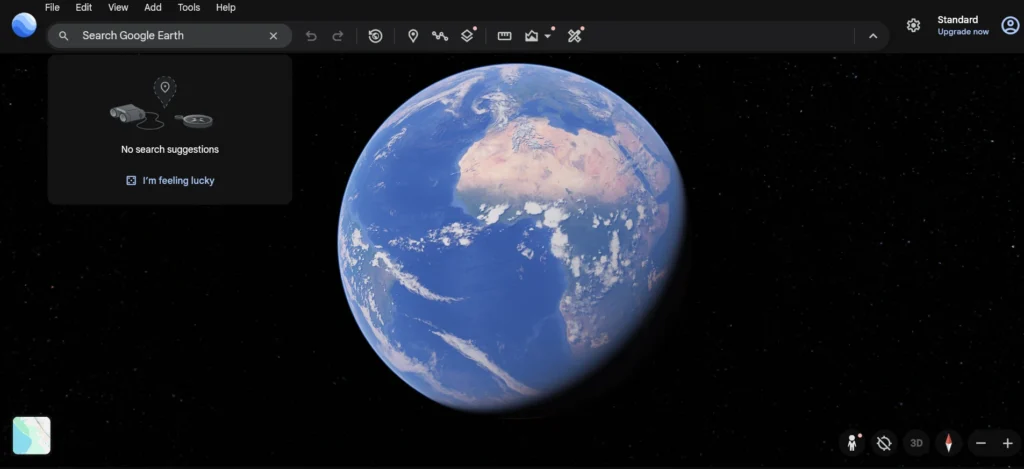
Scroll through photos of the location on the side of your screen, and once you find a place you feel inspired by or curious about, imagine you or a character you like were transported there overnight. Set your timer for 7 minutes and begin writing with the prompt: “I woke up and saw…”
If you’re stuck, here are some further prompts to get your mind moving:
- How did you get there? Do you know or is it a mystery?
- Is this place strange or familiar? Do you like it or dislike it?
- What might you see around you? Smell? Hear? Taste? Feel? Describe it in detail.
- What might a typical day in this place look like? Describe the daily motions.
- Is anyone else there with you? What are they doing there? Are you friends or foes?
Writing to Envision Future Possibilities
Finally, with back to school creeping around the corner, August could be a great time for teens to start envisioning what they want their upcoming school year to look like. Perhaps this means setting some academic and social goals, but it’s also important to reflect on how they want to show up as humans. Here are some sentence starters that might encourage an important conversation on what they’re hoping this year might be like.
This school year,
- I hope I feel…
- I’m worried that…
- I’m excited about…
- I want to focus on…
- I want to focus less on…
- I want my parents to know…
- I want my teachers to know…
- I want others to see that…
- I want to remind myself that…
Bonus: If you have a teen who wants even more ideas for summer creativity, check out our blog post on junk journalling. This could be a great reimagining of vision boards for the upcoming school year, or even a reflective practice for how their summer went.
I hope you found some inspiration in these exercises! If nothing else, I hope this blog opened your heart to the idea that we can all be writers, so long as we pick up the pen.
If you like what you read and are hoping for more ideas for writing, shoot me an email at ceilidhh@counsellingtorontoteens.com and I’d be overjoyed to share. If you or your teen is interested in using creative writing in therapy, I invite you to connect with us. Best of luck writers and happy summer!
References
Andrew, M. (2020, May 20). I miss this time, already. Medium.https://forge.medium.com/i-missthis-time-already-599b97f1d11e
Bensel, A. (2018). In the group home: Disenfranchised youth and the creative writing workshop as intervention. Journal of Creative Writing Studies, 3(1), 1–8. https://scholarworks.rit.edu/jcws/vol3/iss1/3
Deveney, C., & Lawson, P. (2022). Writing your way to well-being: An IPA analysis of the therapeutic effects of creative writing on mental health and the processing of emotional difficulties. Counselling Psychotherapy Research, 22(2), 292-300. https://doi.org/10.1002/capr.12435
Harrison, C. (2021). Rainbow writes: Peer-led creative writing groups’ potential for promoting 2SLGBTQ+ youth wellbeing (Publication No. 2392). [Master’s thesis, Wilfrid Laurier University]. Scholars Commons @ Laurier. https://scholars.wlu.ca/etd/2392
Pennebaker, J. W., & Beall, S. K. (1986). Confronting a traumatic event: Toward an understanding of inhibition and disease. Journal of Abnormal Psychology, 95(3), 274–281. https://doi.org/10.1037/0021-843X.95.3.274
Porras‑Segovia, A., Escobedo‑Aedo, P. J., Carrillo de Albornoz, C. M., Guerrero‑Jiménez, M., Lis, L., Molina‑Madueño, R., Gutiérrez‑Rojas, L., & Alacreu‑Crespo, A. (2024). Writing to keep on living: A systematic review and meta‑analysis on creative writing therapy for the management of depression and suicidal ideation. Current Psychiatry Reports, 26, 359-378. https://doi.org/10.1007/s11920-024-01511-6