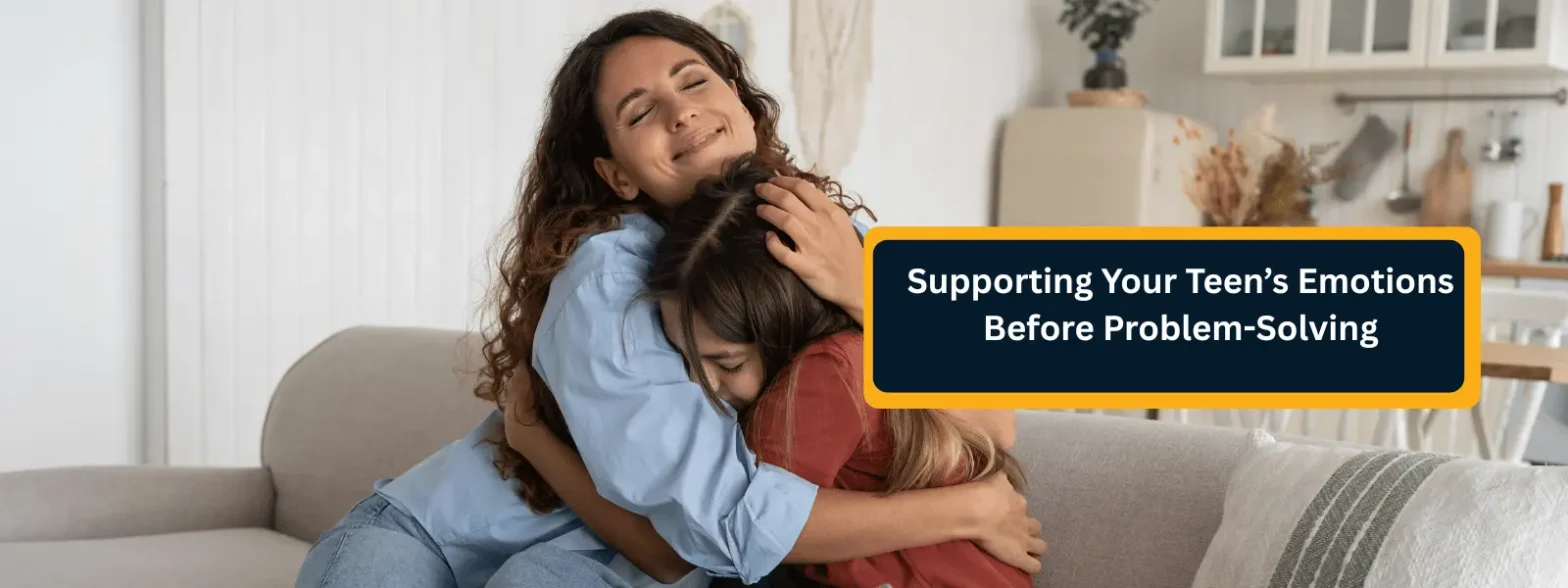
Imagine your teen comes home after spending time with friends. They drop their bag on the floor, let out a heavy sigh, and you can tell something is wrong. When you ask what happened, they tell you about an argument with a friend who has been saying hurtful things. Eager to help, you immediately jump into solutions:
“Just ignore them.”
“Have you asked them to stop?”
“You’ll find other friends.”
“Maybe I should talk to their parents.”
Suddenly your teen shuts down or snaps at you “Back off! You just don’t get it!” and storms into their room. You’re left confused and maybe even frustrated by their reaction as you were only trying to help.
If this sounds familiar, you’re not alone. Parents want to protect their children from pain. It is natural to want to fix the problem or make the hurt feelings go away as quickly as possible.
But when emotions are running high, most teens are not looking for solutions. They’re looking to feel heard, understood, and supported. This is where validation becomes a powerful way to connect with your teen.
What Is Validation?
Validation is the practice of communicating to your teen that their feelings, thoughts, or reactions make sense. It is a way of saying “I’m here with you. What you’re feeling matters, and I want to understand”.
Validation has been found to help teens with emotional awareness and regulation. When they feel understood, they are more likely to be open and connected with you.
A Common Misconception About Validation
One of the most common concerns I hear from parents is that they worry validating their teen means they are agreeing with choices or behaviors they don’t support.
Validation does not mean permission or acceptance of everything your teen says or does. You can validate an emotion while still holding boundaries around behavior.
For example, “It makes so much sense that you’re hurt by what your friend said because they are important to you. At the same time, we still need to speak respectfully to each other, even when we’re upset.”
How to Practice Validation With Your Teen
Validation is a skill that we can all learn, practice, and strengthen. Here are three steps to help you slow down and connect before jumping into solutions.
1. Listen Without Judgment
Put aside distractions, soften your body language, and focus on your teen as you listen to them.
This might sound like:
“I am here for you. I would love to hear more.”
“Wow I can see in your face that this really hurts and is confusing.”
“Thank you for sharing with me.”
2. Identify or Gently Guess the Emotion
Naming emotions helps teens feel seen and helps their nervous system settle. You can reflect the emotion your teen is sharing or take a guess at what they might be feeling.
Even if you guess wrong, it shows you are trying to understand.
You might say:
“No wonder you yelled. You were so angry.”
“How did it feel when your friend said that?”
“I am guessing that felt embarrassing. Is that right?”
3. Reflect and Normalize
Sharing what you have heard, asking open questions, or using the word because can help communicate understanding and curiosity.
For example:
“I would feel angry too if a friend said that.”
“This makes you sad because when your friend says those things it feels like they do not care about you.”
“What do you wish your friend understood?”
Validation Does Not Mean Avoiding Solutions
Parents often ask, “so am I not supposed to give advice?” You totally can! But see if you can validate first and then follow with an invitation to collaborate.
When teens feel heard they are more open to problem-solving and are more likely to ask for guidance themselves, which supports their autonomy and confidence.
For example, “I can see you are upset. Would you like me to just listen, or would you like some help figuring out what to do? “or “is there anything I can do right now to help?”
Notice What Comes Up for You
Validation can be hard, especially when it means sitting with your teen’s distress instead of rushing to fix it. Many parents find themselves minimizing, joking, reassuring or rushing, not because they don’t care, but because they care so deeply.
When you notice this happening see if you can ask yourself what happens inside me when my teen is upset (or any emotion)? Do I feel anxious, helpless, or eager to make it better? Am I trying to soothe them or myself? Can I pause and try to choose connection over correction?
Validating Won’t Solve Everything but It Strengthens Relationships
Validation does not take away your teen’s challenges or guarantee perfect choices. But it will help them to feel less overwhelmed, more understood, and more connected to you. It reminds them that you can be a soft-landing place to share, reflect, and take chances with.
This week when your teen comes to you with fear, frustration, disappointment, or hope, see if you can start with validation. Notice how this might shift conversations. You may come to find yourself feeling more connected and seeing your teen with warmer eyes!
When Teen Counselling Can Help
If you’re navigating challenging moments with your teen and would like additional support, we offer therapy for teens and their families and would love to support you.
References
Validation: How the Skill Set That Revolutionized Psychology Will Transform Your Relationships, Increase Your Influence, and Change Your Life by Caroline Fleck:
https://www.indigo.ca/products/validation-how-the-skill-set-that-revolutionized-psychology-will-transform-your-relationships-increase-your-influence-and-change-your-life?variant=46812170191058