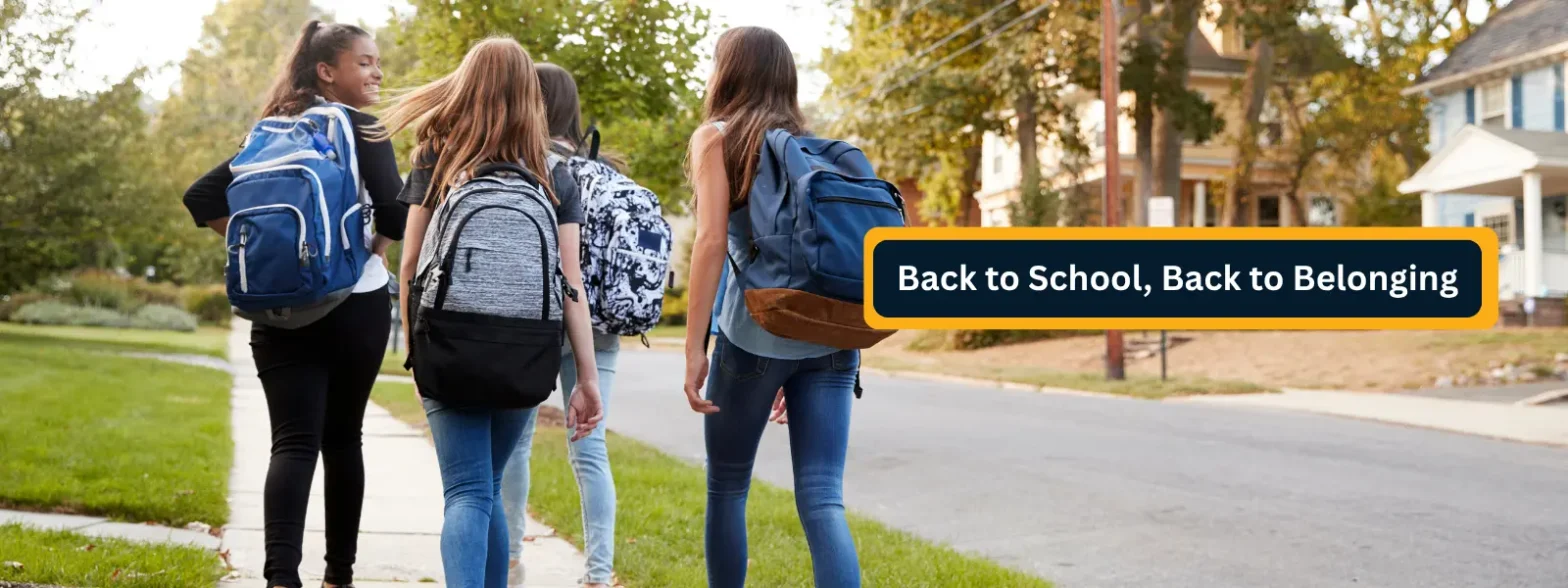
As summer comes to an end and a new school year approaches, conversations often focus on schedules, school supplies, extracurricular activities, and getting back into routines. But for many teens, returning to school also means returning to a complex social world.
Who will they sit with at lunch? Will their friendships still feel the same? Will they fit in with a new group? What happens if a friendship has changed over the summer?
For teenagers, these questions can carry much more weight than they may appear to from the outside. Friendships during adolescence aren’t simply about having someone to spend time with. They are an important part of emotional development, identity, and learning what it means to belong.
Belonging means more than having friends or being part of a group. It involves feeling that we can be ourselves, that we matter to others, and that we have a place where we are accepted.
During the teenage years, when young people are developing a stronger sense of identity and increasing their independence from family, this sense of connection is particularly meaningful.
The Importance of School Belonging
Allen et al. (2024) discuss the impact that school belonging has on students’ mental health. They explain that the relationships young people develop with their caregivers help shape how they understand and build relationships throughout their lives.
They go on to explain that during adolescence, this sense of connection also extends beyond the family to include friends, their community, and their schools.
When young people feel connected to and supported by their school community, they are more likely to feel confident, engaged, and able to build positive relationships.
Experiencing that sense of belonging can help them navigate new experiences and relationships as they grow and move through different stages of life.
Thus, having a school environment where teens feel accepted, supported, and like they belong is an incredibly important part of promoting their emotional well-being and mental health.
Why are friendships important for teen development?
Growing up, I remember my dad often telling me and my sisters that “friendships aren’t everything, you’re going to school to study!”
As an adult looking back, I understand the cultural influence behind those words and recognize that he just might not have known how important friendships are in the teen years.
That said, it’s possible that other parents hold this mentality, too. After all, parents want what’s best for their kids and it’s understandable to focus on the importance of academic success at school.
At the same time, it’s important to recognize that friendships and social connection are also an incredibly important part of school and teen development.
Friendships develop your teen’s emotional skills
Friendships are an important part of how teens develop the social and emotional skills they will carry with them throughout life.
Through their relationships with friends, teens have opportunities to learn how to communicate their needs, listen to different perspectives, set healthy boundaries, and understand how their actions affect others.
They also learn how to handle difficult experiences such as disappointment, rejection, and hurt feelings.
Friendship conflict isn’t automatically a bad thing. In fact, learning to navigate disagreements can be an important part of healthy emotional development.
While conflict can be uncomfortable, it gives teens opportunities to practice communication, compromise, empathy, and repairing relationships after someone has been hurt.
As parents, it can be tempting to step in and resolve friendship problems for their teens, but allowing them the space to work through age-appropriate disagreements—with guidance and support when needed—can help them build confidence and develop healthy relationship skills.
Friendships strengthen your teen’s identity development
During adolescence, teens are developing a stronger sense of who they are and where they fit in the world.
They may begin asking themselves important questions such as: Who am I? What matters to me? Where do I fit? What kind of person do I want to be?
Friendships can play an important role in exploring these questions by giving teens a space to discover their interests, opinions, values, and different aspects of their identity.
Through their relationships with friends, teens may try new things, develop their own perspectives, and learn more about the qualities they value in others.
Friendships can also help teens recognize what makes them feel supported and accepted, as well as when they may be feeling pressured to change who they are to fit in.
As parents, encouraging teens to build relationships where they feel comfortable being themselves can help support their growing sense of identity, confidence, and independence.
Friendships teach your teen about boundaries
Friendships also give teens an important opportunity to learn about boundaries and self-respect.
Healthy friendships aren’t necessarily conflict-free; instead, they are built on mutual respect, trust, and understanding.
Teens are learning that it’s okay to say no, have different interests or opinions from their friends, and disagree without feeling like they are doing something wrong.
They are also learning that being a good friend doesn’t mean always agreeing or putting someone else’s needs before their own, and that healthy relationships involve give-and-take.
As teens grow, they may also discover that not every friend needs to be their best friend and that friendships can naturally change over time.
For parents, it can be helpful to remind teens that maintaining a friendship shouldn’t require them to change who they are or ignore their own needs.
Part of growing up is learning that belonging doesn’t require losing yourself.
Supporting Your Teen Through Friendship Challenges
When your teen is struggling with a friendship, it can be difficult to know when to step in and when to give them space to work through it themselves.
One way to think about the parent’s role during adolescence is to imagine yourself as the edge of a pool. You are a stable, consistent presence that your teen knows is there, even as they venture further into the “deep end” and navigate new experiences on their own.
Your teen may push off from the edge, explore, make mistakes, experience conflict, and figure things out for themselves—but knowing that you are a reliable and stable presence for them to return to provides a sense of safety and security.
Instead of: “Just stop being friends with them.”
Try: “What is happening in this friendship that is making you feel this way?”
Instead of: “Don’t worry about what other people think.”
Try: “It sounds like being left out really hurt. Do you want to talk about what happened?”
Instead of: “You need to stand up for yourself.”
Try: “What do you think you would like to say or do? What makes it feel hard to say or do that? How can I support you?”
Instead of: immediately offering a solution,
Try: asking, “Do you want me to listen, help you think through what to do, or help you figure out what to say?”
This approach allows teens to develop their own problem-solving, communication, and boundary-setting skills while knowing that a trusted adult is there when they need support.
Friendship conflict, disappointment, and changes in relationships are a normal part of adolescence.
Your teen can venture into new relationships, take risks, make mistakes, and learn from their experiences—while knowing there is always a safe place to come back to.
At the same time, being a steady presence means paying attention to when your teen may be struggling beyond what they can manage on their own.
When More Active Involvement May Be Needed
There are circumstances when parents feel especially concerned about their teen’s social challenges and may need to get more involved.
It may be an indication that your teen needs additional support if they are:
-
becoming increasingly withdrawn,
-
experiencing significant or ongoing anxiety about school,
-
avoiding social situations,
-
showing noticeable changes in mood or behaviour,
-
struggling with sleep or daily functioning,
-
or experiencing ongoing bullying or harassment.
If you’re noticing these kinds of challenges with your teen, it’s important to express curiosity, care, and a desire to understand what’s going on for them.
You may voice the changes you’ve noticed in them, express your love and care for them, and gently ask about what they’re experiencing.
While it may take them time to open up, being consistent is important.
You may also consider therapy for your teen and can start by asking them if this is something they’re open to.
Important Reminders When Heading Back to School
As teens head back to school this month, they are returning not only to classrooms and routines, but to communities and relationships.
Friendships will change, new connections will form, and some relationships may become more distant. These experiences are part of growing up.
Through their friendships, teens are learning how to communicate, set boundaries, manage conflict, understand themselves, and care for others.
They are also learning something fundamental: what it feels like to belong.
Friendships can help teens develop confidence, emotional resilience, and a stronger sense of identity, while also teaching them that healthy relationships involve respect, communication, and the freedom to be themselves.
As a parent, you can’t—and don’t need to—make every friendship experience easy for your teens or solve every challenge for them.
Instead, listen, validate their feelings, offer guidance when needed, and remind them that relationships can be navigated, repaired, and, sometimes, allowed to change.
Most importantly, we can help teens understand that their feelings matter and that their sense of worth does not depend on being accepted by a particular person or group.
Allen, K.-A., Greenwood, C. J., Berger, E., Patlamazoglou, L., Reupert, A., Wurf, G., May, F., O’Connor, M., Sanson, A., Olsson, C. A., & Letcher, P. (2024). Adolescent school belonging and Mental Health outcomes in young adulthood: Findings from a multi-wave prospective cohort study. School Mental Health, 16(1), 149–160. https://doi.org/10.1007/s12310-023-09626-6