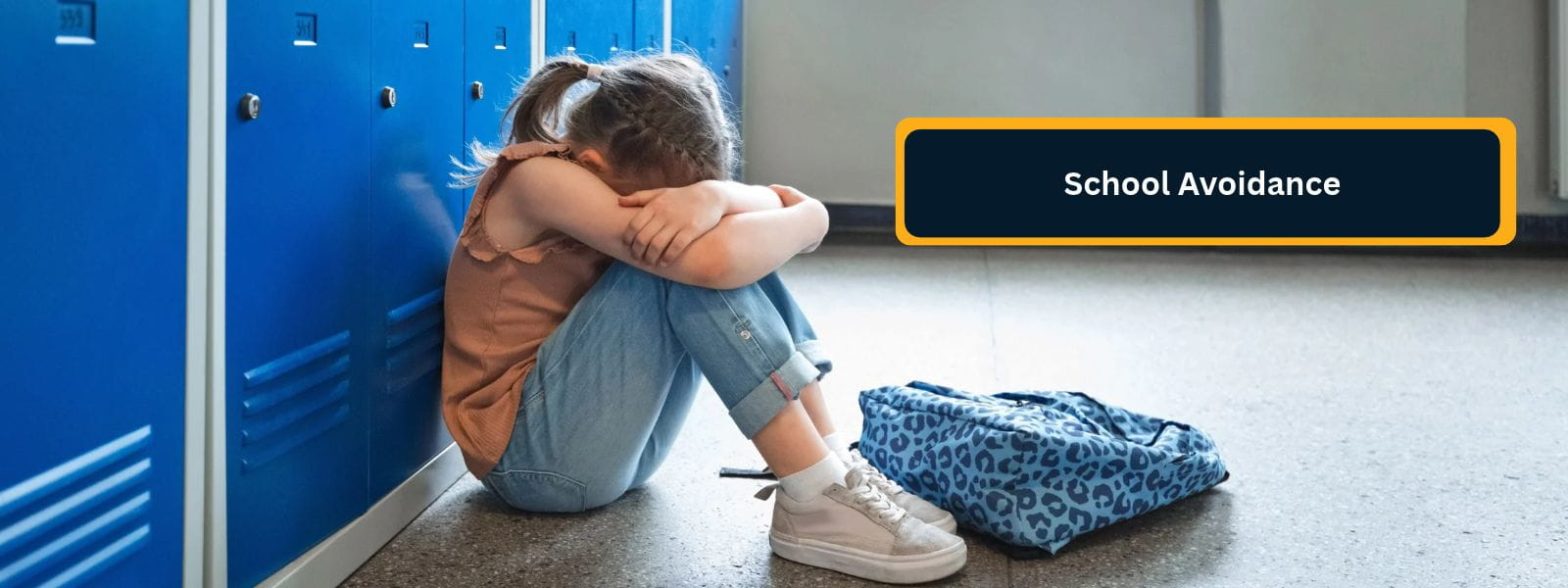
For so many of our kids, the new school year brought such hope and excitement: seeing friends again, wiping the academic slate clean, starting new classes and extracurricular activities, not to mention the new outfits! For others, apprehension was at the forefront: reminders of last year’s challenges, past social struggles, the idea of increasing academic pressures, or upcoming university applications.
Both of these back-to-school experiences are expected and likely co-occur for most youth. Typically our kids have moved past these feelings by now and they’ve settled into a new groove. But what if that groove has turned into something else?
By mid-fall, maybe it has turned into a repeating stomach ache, fatigue [well of course that makes sense, they’re tired teens!], a headache, or feeling generally unwell or overwhelmed. You and your teen agree they need a mental health day, or even a couple days, away from school for some much-needed rest and a bit of a reset. As a caring parent, of course you don’t want your child to feel distressed.
Then a day off turns into a few days, or longer, and at some point you are noticing that your teen is increasingly struggling to get to school altogether, and you are struggling watching this happen.
What’s Going On?
Academic Pressures Are Increasing:
By November, teens are typically hitting the middle of their first semester and the realities of the workload may be setting in. Assignments and mid-term exams may be well underway, the first report card is coming out, and parent-teacher conferences are on the horizon. For some of our Grade 12’s, post-secondary applications have begun.
In our busy and crowded classrooms, help might not be readily available, if our kids are comfortable asking for it. School guidance counselors may be overloaded with academic advising, helping with university applications, and providing mental health support for their many students.
Social Pressures Are Pervasive:
It’s no secret that the social landscape of our world has changed forever. With the exponential growth of social media and the use of digital technologies for school, teens have endless opportunities to be in almost constant contact with each other, whether they want to be or not.
Social challenges that could once be left behind as the bus door closed now intrude into the safe-haven of their own home. Teens receive endless strings of notifications and messages. As a result, they can’t as easily remove themselves from stressful conflicts with peers.
Still others want to be gaming online when their friends are, and be present on social media at ‘peak hours’ – often well into the night or the wee hours of the morning.
Winter is Coming:
Just like any of us adults, our teens are also susceptible to mood changes due to the waning hours of daylight and the accompanying colder temperatures. Up to 15% of the population report experiencing The Winter Blues, while up to 3% of the population meet criteria for Seasonal Affective Disorder, a condition characterized by a pervasive low mood that lasts longer than two weeks and that is potentially impacting a person’s ability to function in aspects of their life. CAMH reports that young people are more likely to develop symptoms of Seasonal Affective Disorder. Check out How to Care for Your Mood This Fall and Winter by Arllene Williams for tips on helping teens manage seasonal mood changes.
Attendance Matters:
Here’s the thing, attendance always mattered, or we wouldn’t be here talking about school refusal. But this year, it matters in a whole new way. As of the 2026-2027 school year, the Ontario Ministry of Education established a policy that would include attendance in the final marks of high-school students. For Grades 9 and 10, attendance and participation accounts for 15% of the final grade, and in Grades 11 and 12, it accounts for 10%.
In reality, this isn’t a lot. But for many of our anxious teens, there’s a perceived added layer of pressure when they’re already feeling stressed about missing school.
An excused absence does not lower a student’s mark. Families should check with their school how their teen’s absences are recorded.
All this to say, it’s no wonder that Winter Break seems impossibly far away.
What Can You Do?
While there are no magic words you can say to take your teen’s anxiety around school away, there are many things you can do to support them.
1. Check-In Proactively & Meaningfully
It’s not always easy to have in-depth conversations with our kids. They are on-the-go, often prefer to talk to friends, or just want their alone time. Quick, intentional check-ins can do wonders, however. Here are a few tips:
- Ask questions that can’t be answered with yes or no. For example, instead of “Did you go out for lunch with your friends today?” ask “Which friends did you go out for lunch with today?” This little shift in the question gives you just a little more information about their day, who they’re hanging out with, and some potential conversation starters.
- Instead of the automatic “How was your day?”, consider asking your teen something like:
- “What was something fun you did today?”
- “What did you do in English class today?”
- “What assignment are you feeling the most stressed about these days?”
2. Stay Connected To The School & Find Out Who Your Child Is Connected To
If you are really noticing a trend that anxiety around school is increasing, try to stay connected to the school. Loop in the guidance counsellor and/or admin so they are aware and can proactively develop strategies to support your child. These might include scheduling a regular check-in with the guidance counsellor, ensuring guidance and admin are connecting with your child’s teachers, and providing support around prioritizing assignments and taking the pressure off by removing some if possible. If necessary, they can also provide information around day-treatment school programs that partner with mental health agencies for wrap-around support. Help Ahead is an excellent resource to help connect teens and families to these kinds of programs.
While guidance and admin can be great supports, your child might feel more connected to another adult in the school. Find out who that adult is – a math teacher, a coach, a child & youth worker. Work with the school to see if there are ways for that adult to support your teen, even if it’s just a quick check-in to let your child know they care and are aware of what they’re going through.
3. Set the Standard: Home As The Less-Preferred Option
Home is typically our sanctuary – a soft place to land, our comfort zone, a place we can shut out the world for a while if we need to. With school anxiety and avoidance, however, home can become a little too comfortable – so comfortable that it becomes the preferred option between going to school and not.
Home is often equipped with leisure options like video games, scrolling social media and the internet, maybe binge-watching a show, sleeping in, or taking a nice long nap in the dark days of winter.
As much as we don’t want our kids to suffer, we really don’t want home to become the preferred option. Be consistent with your expectations that school is a priority and do your best to set expectations around assignment completion and submission. In more extreme cases, some parents choose to turn the wifi off during school hours to encourage school being the better option for socializing with friends.
4. Understand the Anxiety Curve
In my work with youth over the years, one of the pieces I consistently talk about with them is the Anxiety Curve. With school avoidance due to anxiety, there is often a specific pattern. While our kids may have the best of intentions the night before or the morning of school, something happens when it’s go-time → the anxiety increases – a lot.
The response to this spike in anxiety? Avoid altogether, it’s just too much! According to this anxiety curve, as soon as the event is avoided, our teens experience immediate relief. But each time the event approaches again, the anxiety can increase even more. And this happens again, and again.
The other response – your teen goes to school! Success, right? Sort of…while it may be very difficult for your teen to overcome that now very high anxiety, the stress might take a little longer to pass. It might bleed over into that bus ride or walk to school. It might carry in that 1st period class or lunch. And that’s okay, because each time they follow-through with the event, in this case going to school, the anxiety will decrease in the time approaching the event and will take less time to dissipate.
5. Check In With Family Doctor & Mental Health Supports, For Your Teen AND You
It’s never a bad idea to check in with both a family doctor and any mental health support that is available – for both your child and you. It’s not easy for teens and parents to go through this, and you both deserve the validation and support around doing the best job you can in a very difficult situation. The Toronto Counselling Centre for teens offers individual teen counselling, parent counselling, and family counselling and we’d be happy to support you and your teen.
As a final note, many families want to keep their struggles private – fair. I’ve spoken with many parents about this over the years, and I try to encourage talking to an extended family member or friend they trust. In many cases, keeping a secret puts a lot of pressure on parents and having someone to talk to outside of the house becomes a bit of a relief.
For more perspectives on this topic, check out another blog by Erin O’Rourke “Lessons I’ve Learned in Mental Health and Education.”
Sources: